

By Chris Jokerst, Owner and Founder, Commercial Roof Repair Solutions LLC (CRRS)
I’ve spent 19 years in commercial roofing, and I’ve run Commercial Roof Repair Solutions since 2017. I’ve walked a lot of flat roofs in Texas heat. If you own or manage a warehouse, an industrial building, or a strip center, somebody has probably told you that you need commercial TPO roofing. Maybe you do. Maybe you don’t.
This guide covers what TPO actually is, how it holds up on the Gulf Coast, when I’d recover a roof instead of tearing it off, when I’d skip TPO and coat the roof instead, and what a real proposal should include. No sales fluff. This is what I’d tell you standing on your roof.
What Is Commercial TPO Roofing?
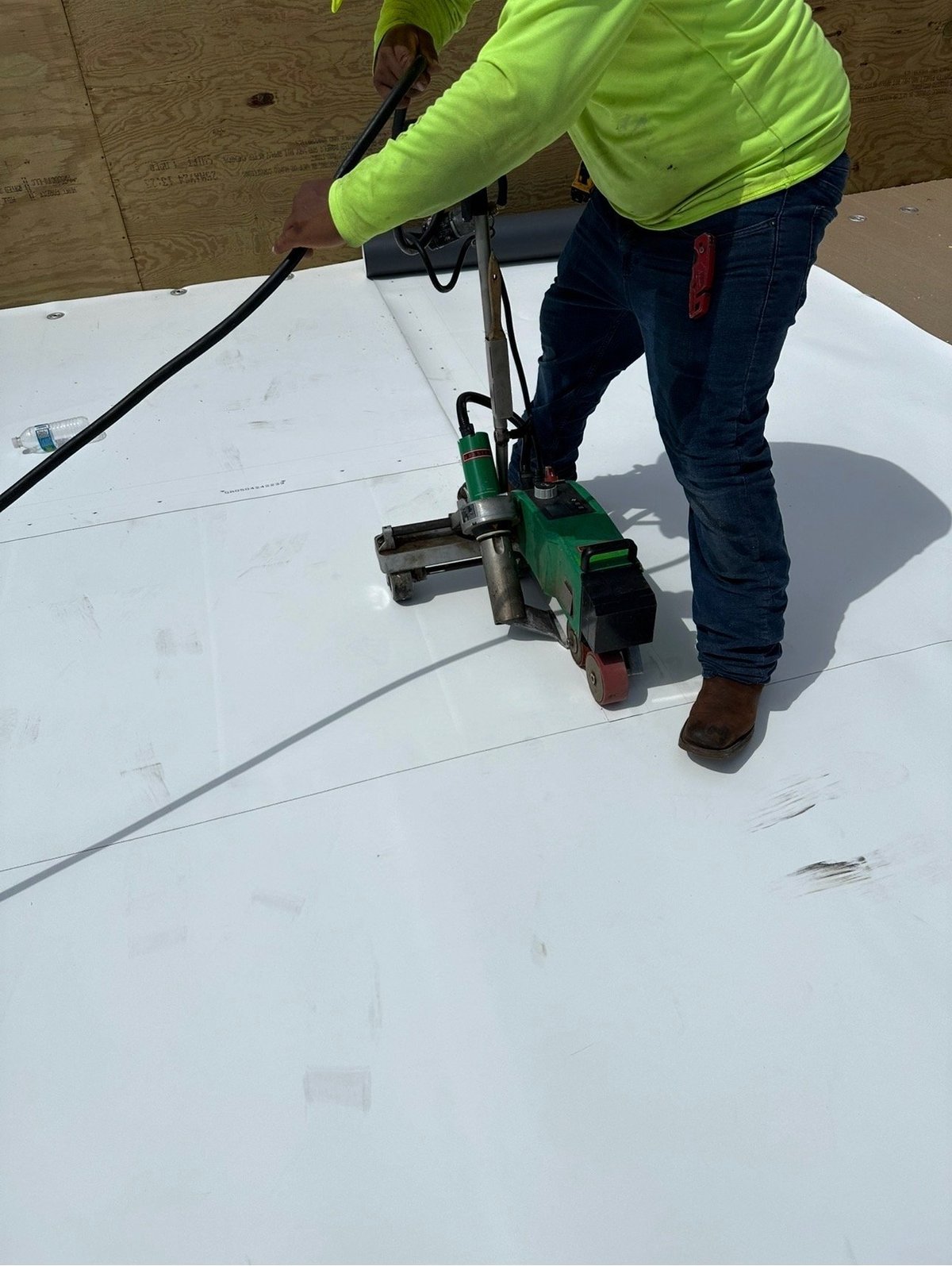
TPO stands for thermoplastic polyolefin. It’s a single-ply membrane, one sheet of reinforced plastic-rubber blend, that goes on flat and low-slope commercial roofs. The sheets are joined by hot-air welding. The seams are melted together, not glued, so when they’re welded right, the field of the roof becomes one continuous piece of waterproofing.
Most TPO is white. Here in Texas, that matters. A white roof reflects a lot of sun that a dark roof would soak up, so the surface runs cooler and the building below has an easier time. If reflectivity is a big deal for your building, ask for the membrane’s rated values. The Cool Roof Rating Council publishes independent ratings for roofing products. Here’s my one caveat: a white roof won’t fix a building with bad insulation. Reflectivity helps. It’s not magic.
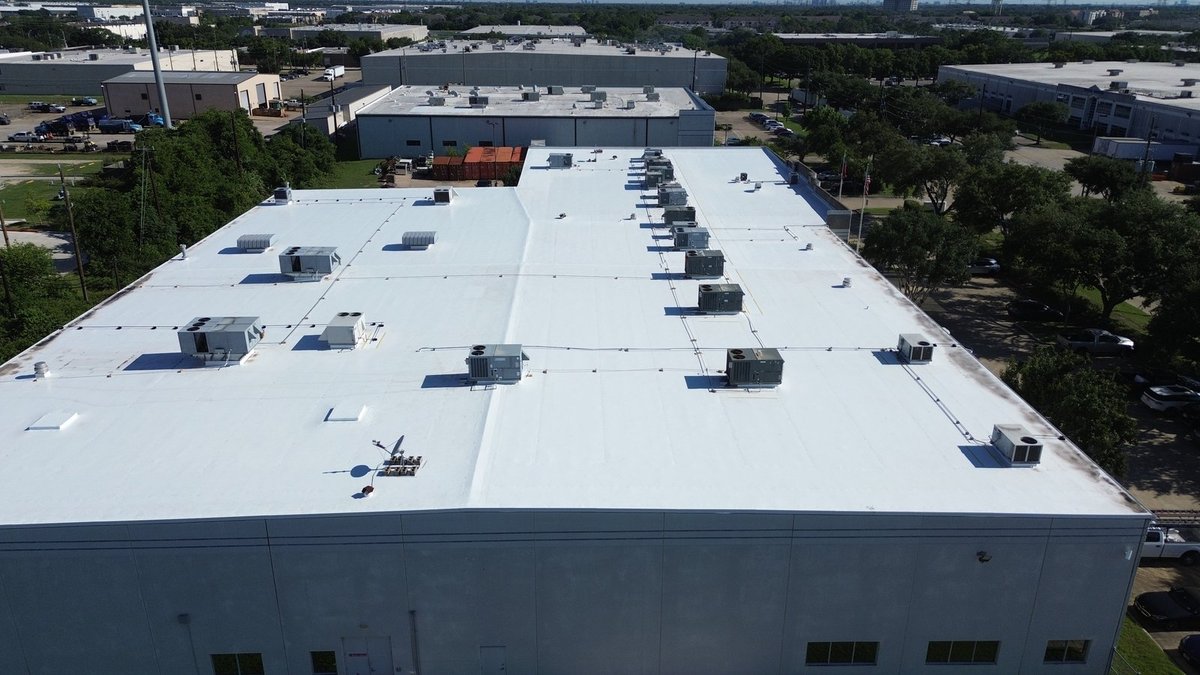
I’ve installed a lot of commercial TPO roofing, including a 120,000 square foot roof we have drone footage of. It’s a great system when it’s the right system. The rest of this guide is about figuring out whether it’s right for your building.
What TPO Thickness Should I Use: 45, 60, or 80 Mil?
TPO comes in a few common thicknesses: 45 mil, 60 mil, and 80 mil. A mil is one-thousandth of an inch. More thickness means more material above the reinforcing scrim. That’s the part that takes the UV, the foot traffic, and the hail.
Here’s what that looks like on paper. On GAF’s published EverGuard TPO data sheet, the 45-mil sheet carries about 16 mil of material over the scrim. The 60-mil sheet carries about 24 mil, and the 80-mil sheet about 31. The industry standard for TPO, ASTM D6878, only requires 15 mil over the scrim. So “meets the spec” and “built for a Texas roof” aren’t the same thing.
My baseline is 60 mil. That’s what I spec on most commercial TPO roofing jobs. A 45-mil sheet is how some bids get to a lower number, and it can meet the manufacturer’s minimums. But on a Texas roof that’s going to bake in UV for years and catch the occasional hailstorm, I want more material up there. I’d look at 80 mil for roofs with heavy traffic, like a lot of rooftop equipment and HVAC techs walking it every month, or for owners who plan to hold the building a long time.
Thickness isn’t a warranty, though. Two 60-mil sheets from different manufacturers aren’t automatically equal. Ask for the product data sheet (here’s what one looks like) and the warranty requirements for the exact membrane being quoted.
How Is a TPO Roof Installed?
There are three main ways to attach TPO:
- Mechanically attached: Fasteners and plates hold the insulation and membrane down along rows. The next sheet overlaps the row and gets welded over it. This is common on recovers and metal decks.
- Fully adhered: The membrane is glued to an approved board with the manufacturer’s adhesive.
- Induction welded: Special plates are fastened underneath, and a tool heats them so they bond to the membrane from below without exposed fastening rows.
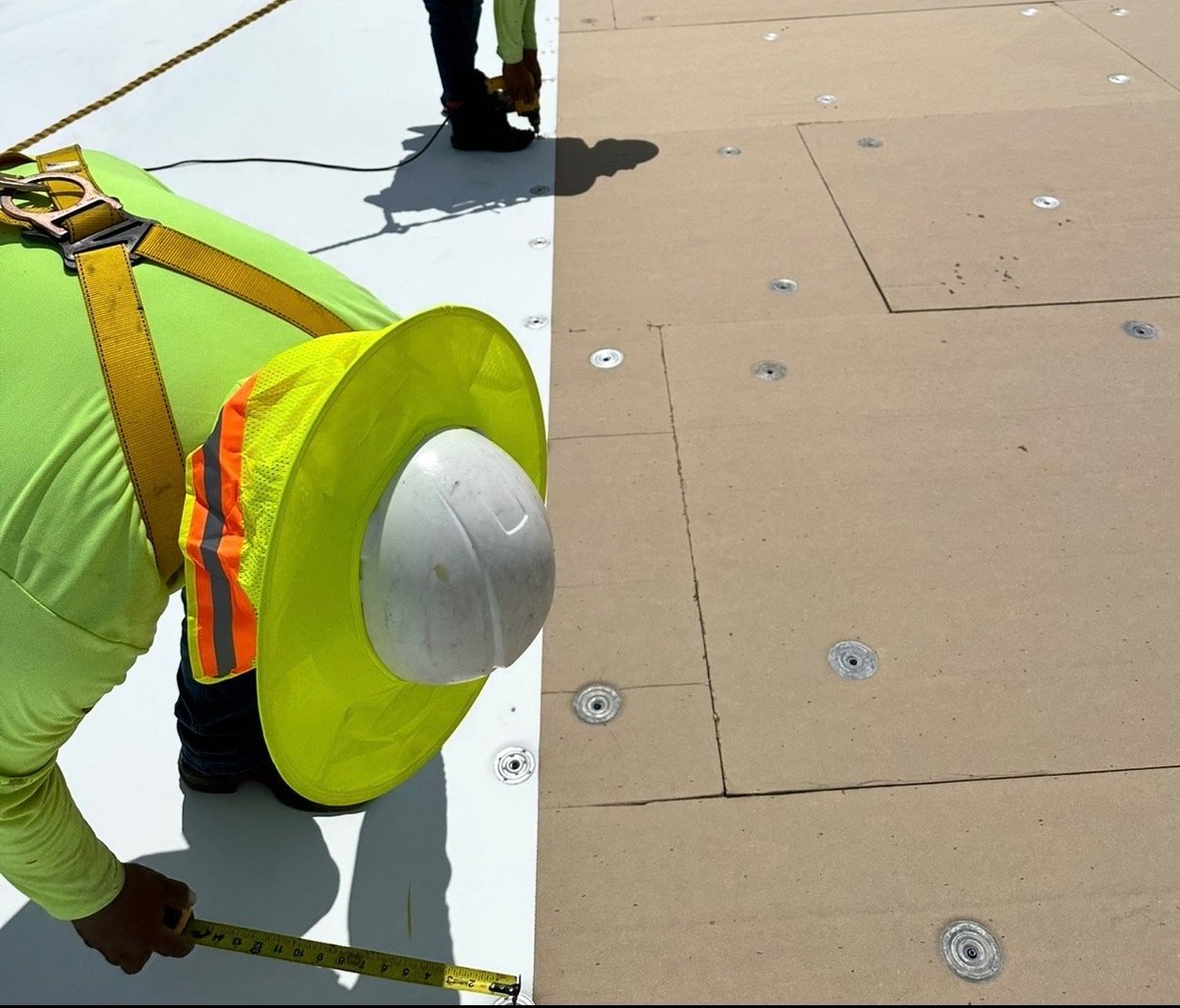
On the Gulf Coast, attachment isn’t a detail. It’s the whole game. Hurricane and tropical storm winds try to peel roofs off from the edges and corners. Your fastening pattern has to match the wind design for your building’s height, exposure, and location. Manufacturer warranties require proper fastening, too. If the fastening isn’t right, you can lose the warranty along with the roof.
If your building is in one of the Texas coastal areas where the Texas Department of Insurance handles windstorm inspections, ask up front whether your new roof needs to be inspected and certified for windstorm coverage. Find that out before the job starts, not after.
The open field of a roof is the easy part. The money is in the details: drains, pipe penetrations, curbs, walls, edge metal, and transitions. That’s where I spend my time when I inspect someone else’s work, and it’s where most leaks start.
About cover boards: I don’t use DensDeck as a standard cover board on my jobs unless it is spec’d that way. When a job calls for a 1/2″ recovery board, mine is usually fiberboard. On recovers, I like 1″ polyiso.
Can TPO Be Installed Over My Existing Roof?
Often, yes. A recover (some people call it a layover) puts a new TPO assembly over the existing roof instead of tearing everything down to the deck. It saves on demolition, dumpsters, and disruption to the business running underneath.
But you can’t cover up a wet roof and call it fixed. Before I recommend a recover, I want to know how much moisture is in the existing roof, the condition of the deck, how the roof drains, how many roof layers are already up there (code limits that), and whether the existing assembly will hold the fasteners. That means core cuts, and on recovers it often means pullout tests to prove the fasteners will hold to the manufacturer’s standard. If a contractor wants to recover your roof without cutting into it, ask why.
A real example: An industrial building on the Gulf Coast near Alvin, about 12,250 square feet. It’s a metal roof that somebody spray-foamed, and they did it poorly. The plan is to strip the bad foam, fill the metal flutes with polyiso strips so there’s a flat surface, add 1″ of polyiso on top, and mechanically fasten 60 mil TPO. That building didn’t need to be torn down to the purlins. It needed someone to take off what was failing and build the right system back up. (More on that kind of job: TPO over a metal roof.)
Should I Recover My Roof or Tear It Off Completely?
A full tear-off takes the old roof down to the deck. You see everything, replace what’s rotten or rusted, and build the new roof with no unknowns hiding underneath. It costs more up front and takes more time, but sometimes it’s the only honest answer.
When I recommend a tear-off:
- There’s widespread wet insulation.
- The deck is damaged or rusted through.
- The roof already has the maximum number of layers. Usually 2.
- The existing roof can’t hold fasteners well enough to pass for the new system.
When I recommend a recover:
- The existing assembly is mostly dry and sound.
- The deck is solid.
- The new system can be engineered and fastened to the manufacturer’s standard.
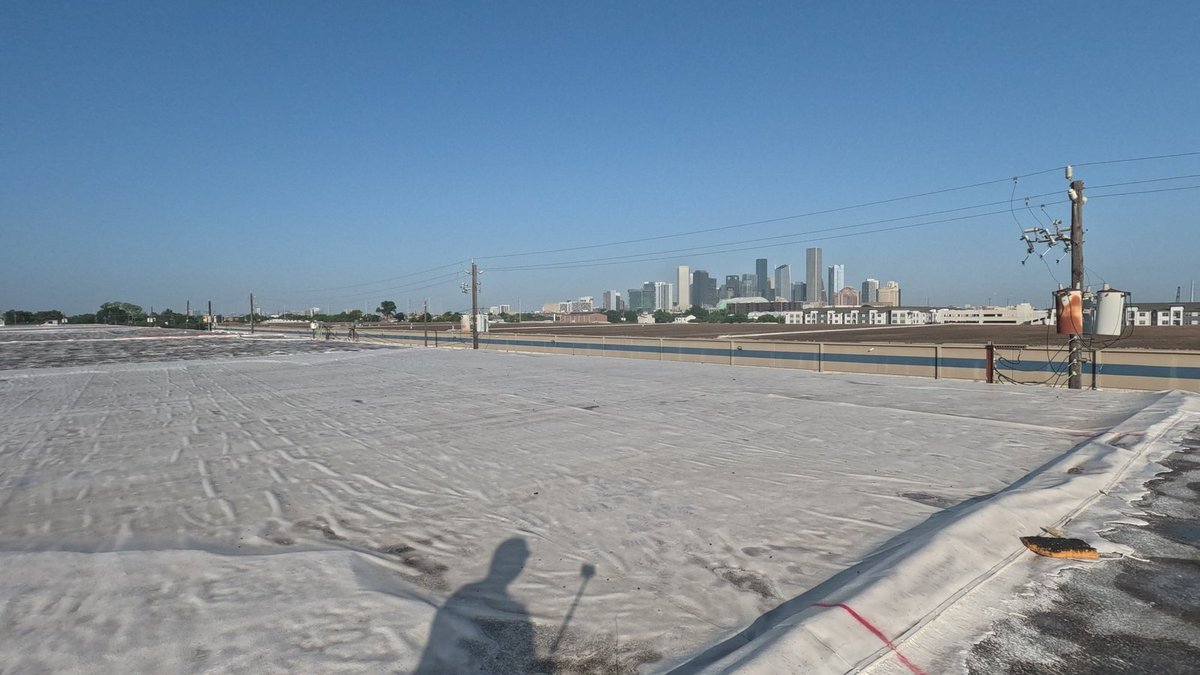
Here’s one that’s past recovering. I walked a big spray foam roof in downtown Houston. It was probably sprayed over an old built-up gravel roof. The May 2024 derecho and then Hurricane Beryl hit it hard. Up there you’ve got wind damage, temporary repairs, ponding, bubbles, and decking sinking along an expansion joint. Somebody foamed the plumbing vents so heavy that a 4-inch pipe is down to about 2 inches. That roof isn’t serviceable anymore. TPO over the top could only ever be a temporary repair. The real fix is a full tear-off and a mechanically fastened TPO roof, which is a lot stronger in Gulf Coast wind.
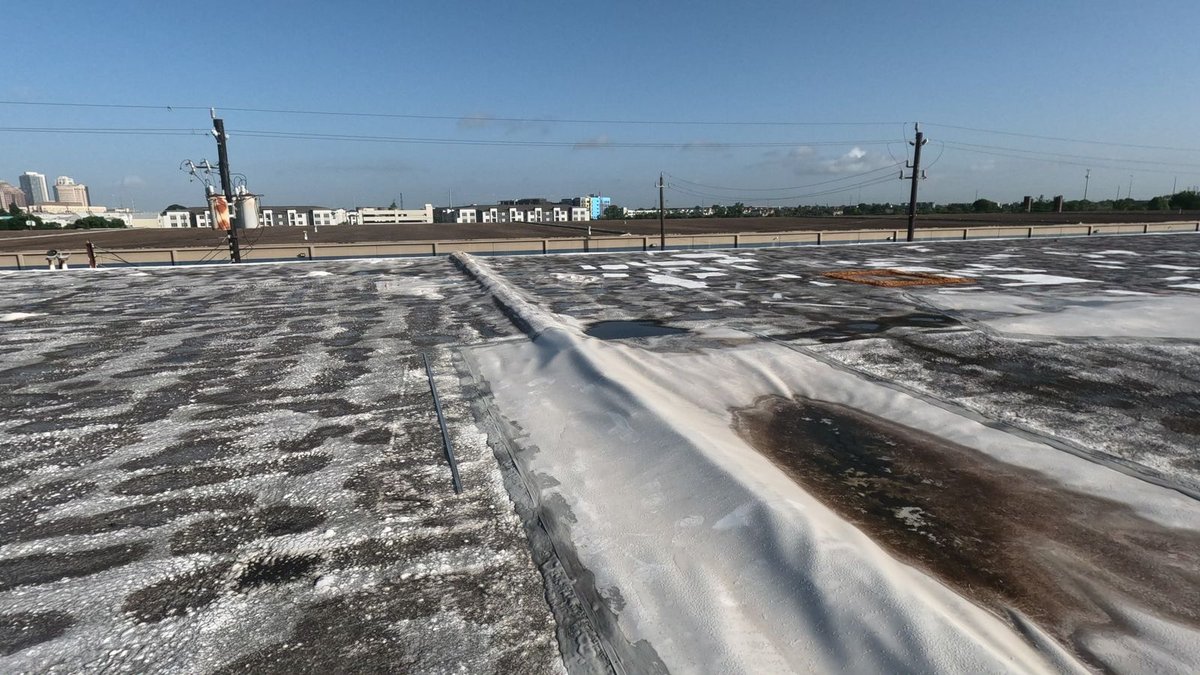
Whichever way you go, compare bids line by line: insulation, cover board, attachment, flashing details, edge metal, drainage fixes, and warranty. A low number usually means something got left out.
Is TPO or Silicone Roof Restoration Better for My Building?
I’m going to be straight with you, because this is where a lot of owners get oversold. Coatings, especially silicone restoration, are what we do in-house at CRRS. It’s our specialty. A lot of the roofs I see that got quoted for new commercial TPO roofing didn’t need it.
The two solve different problems:
- Silicone restoration restores and protects an existing roof that’s still basically sound. You fix the problems, prep the surface, and coat it. You get a seamless surface without tearing anything off.
- New TPO gives you a new membrane and a chance to add insulation, new flashings, and fix drainage.
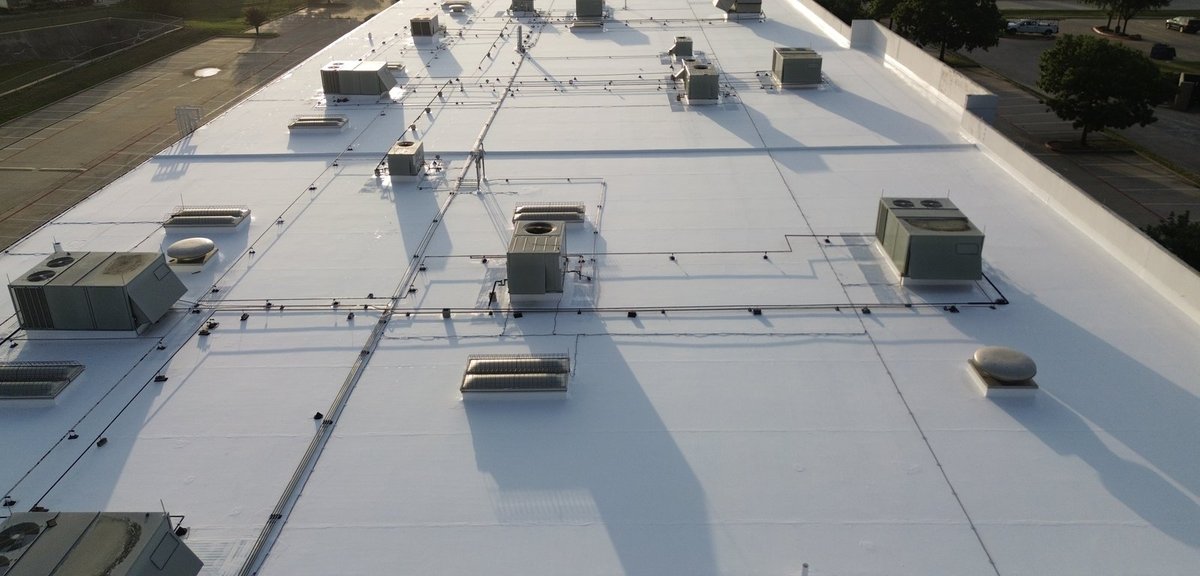
If the roof is mostly dry, the details can be fixed, and the surface is compatible with the coating, restoration is usually the smarter money. If the roof is wet throughout, falling apart at the seams, or failing at the attachment, coating it is just painting over a problem. That’s when I’d move to TPO.
The question isn’t “Which product is better?” The question is “What shape is my roof in, and how long am I keeping this building?”
How Long Does Commercial TPO Roofing Last in Texas?
Nobody can honestly promise you a lifespan down to the year. A TPO roof’s life comes down to the membrane, the thickness, the installation quality, how much traffic it gets, how well it drains, and the weather it lives in.
Texas weather is rough on roofs:
- UV and heat: Our summers punish membranes year after year. This is a big reason I start at 60 mil.
- Humidity: Gulf Coast moisture finds its way into roofs that weren’t built tight, and wet insulation underneath shortens a roof’s life quietly.
- Hail: It can bruise and puncture membranes and the insulation under them. After a big storm, get the roof looked at before you assume it’s fine.
- Hurricanes and wind uplift: Edges and corners take the hit first. Fastening and edge metal decide whether the roof stays put. (More on getting ready for storm season: hurricane roofing tips.)
- Ponding water: Flat warehouse roofs with poor drainage hold water for days. Standing water stresses seams and adds weight, and every manufacturer has rules about it.
Warranties are not lifespans. A 20-year warranty doesn’t mean the roof lasts exactly 20 years, and it doesn’t mean everything is covered. Read the exclusions and your obligations as the owner. Find out whether it covers materials only or labor too, and whether it transfers if you sell the building. Ask whether the system qualifies for a manufacturer no-dollar-limit (NDL) warranty and what inspections it takes to get one.
Where Do TPO Roofs Usually Leak?
The big open field of a TPO roof is rarely where it fails. Leaks usually come from:
- Pipe penetrations and rooftop equipment curbs
- Drains and scuppers
- Edge metal and terminations
- Wall transitions
- Bad or old repairs
- Seams that were never welded right
- Punctures from dropped tools or HVAC work
- Ponding areas that never dry out
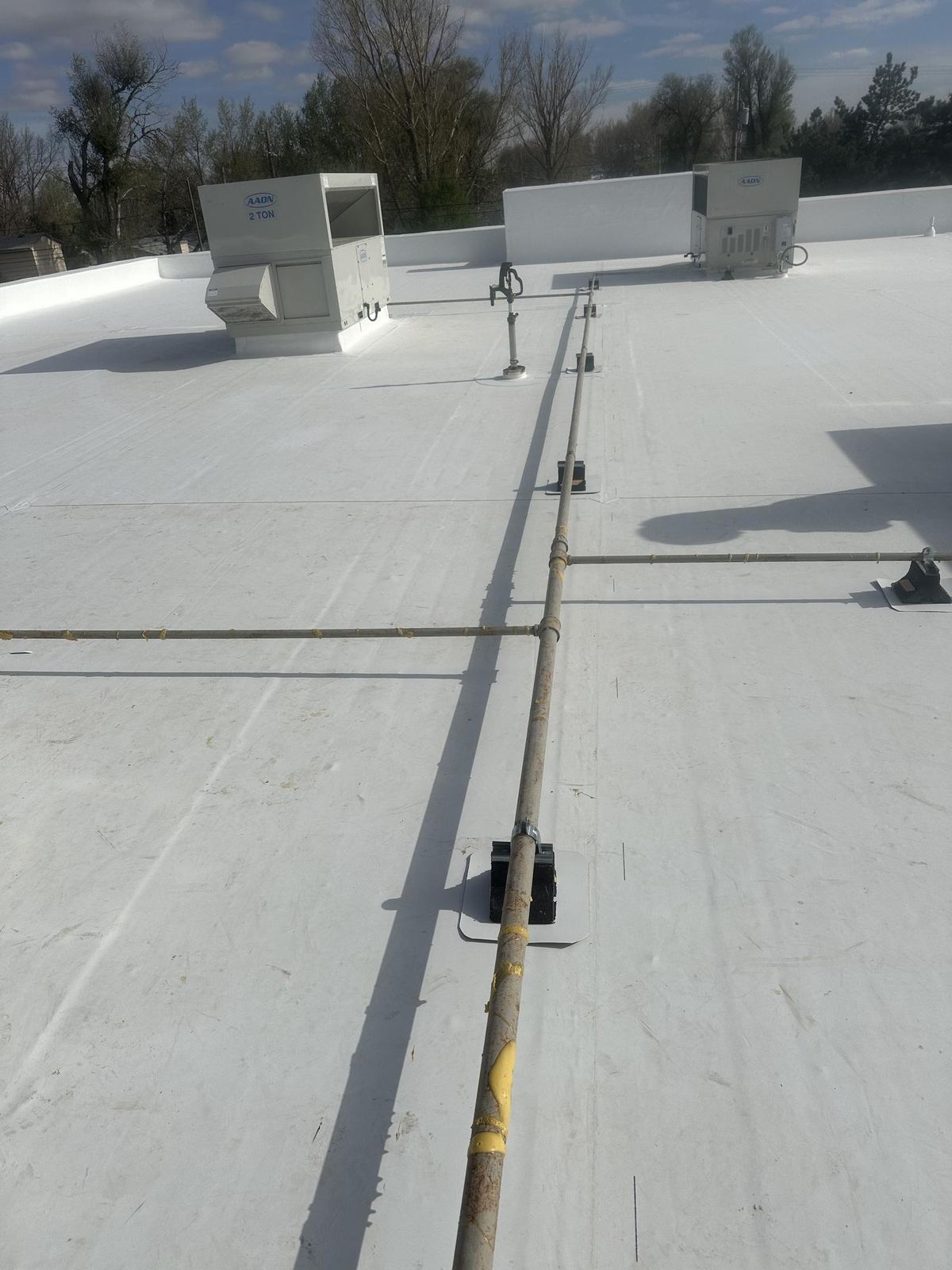
Water travels, too. The stain on your ceiling tile is often nowhere near the hole. Water runs along the deck, the insulation, or a beam before it drips.
A real leak investigation finds the source, documents it with photos, and repairs it with compatible materials. Throwing caulk at the spot right above the stain doesn’t count.
Can a TPO Roof Be Repaired?
Yes. Most localized problems can be fixed with a compatible TPO patch, hot-air welded by someone who knows what they’re doing. Older, weathered TPO has to be properly cleaned and prepped first, or the patch won’t take a weld. That’s where amateur repairs fail.
Repairs make sense when the problem is isolated and the rest of the roof is in good shape. If you’re paying for repairs in five different spots every year, finding wet insulation everywhere, or watching the membrane break down across the field, that roof is telling you something. At that point you need a plan, not another patch.
How Do I Stop Wasting Money on Roof Repairs?
Here’s what I can’t stand: owners spending money on repairs year after year, and when the roof finally needs to be replaced, they get nothing for it. Every dollar is gone.
That’s why we built the CRRS Roof Equity Program. Under our Roof Equity Program, the money you spend with us on repairs counts toward your future roof, up to the program limit. Your repair dollars stop disappearing and start building toward the roof you’re eventually going to need.
Whether you’re in the program or not, keep a record of every repair: where, when, what was done, and what it cost. Get the roof inspected after major storms. Good records show you when repair money is protecting a good roof and when it’s just delaying a replacement.
What Should a Commercial TPO Roofing Proposal Include?
A real proposal tells you what’s on your roof now and exactly what you’re buying. A square-foot price alone isn’t a proposal. Look for:
- Membrane manufacturer and thickness
- Insulation type and thickness, plus any cover board
- Attachment method and wind design
- Recover or tear-off, and what testing backs that up (core cuts, pullout tests)
- Details at curbs, walls, penetrations, and drains
- Edge metal and drainage corrections
- Disposal, exclusions, and the schedule
- Warranty type and who issues it
Ask what happens if they find wet insulation or a bad deck once they open the roof, and what triggers a change order. If your building is occupied, ask how they’ll protect your operation, your tenants, and your people while they’re working overhead.
How Much Does Commercial TPO Roofing Cost?
I’m not going to throw a number at you in a blog post, and you should be suspicious of anyone who prices a roof without seeing it. The price of commercial TPO roofing depends on roof size, height and access, what’s up there now, insulation, membrane thickness, attachment, penetrations, and whether it’s a recover or a tear-off.
What I’d tell you: get a site-specific assessment and have the contractor compare your real options side by side. That means targeted repair, silicone restoration, a TPO recover, and full replacement. A good roofer will tell you why each option does or doesn’t fit your building, not just what it costs.
Why Does It Matter Who Inspects My Roof?
I’ve heard commercial roofing called the realest, fakest industry there is, and I think that’s fair. It’s real because this is physical, dangerous work, and the people doing it earn every dollar. The fake part is that the person who shows up to sell you a roof isn’t always someone who has spent much time on one. Sometimes the person who really understands what’s going on up there never sets foot on your building.
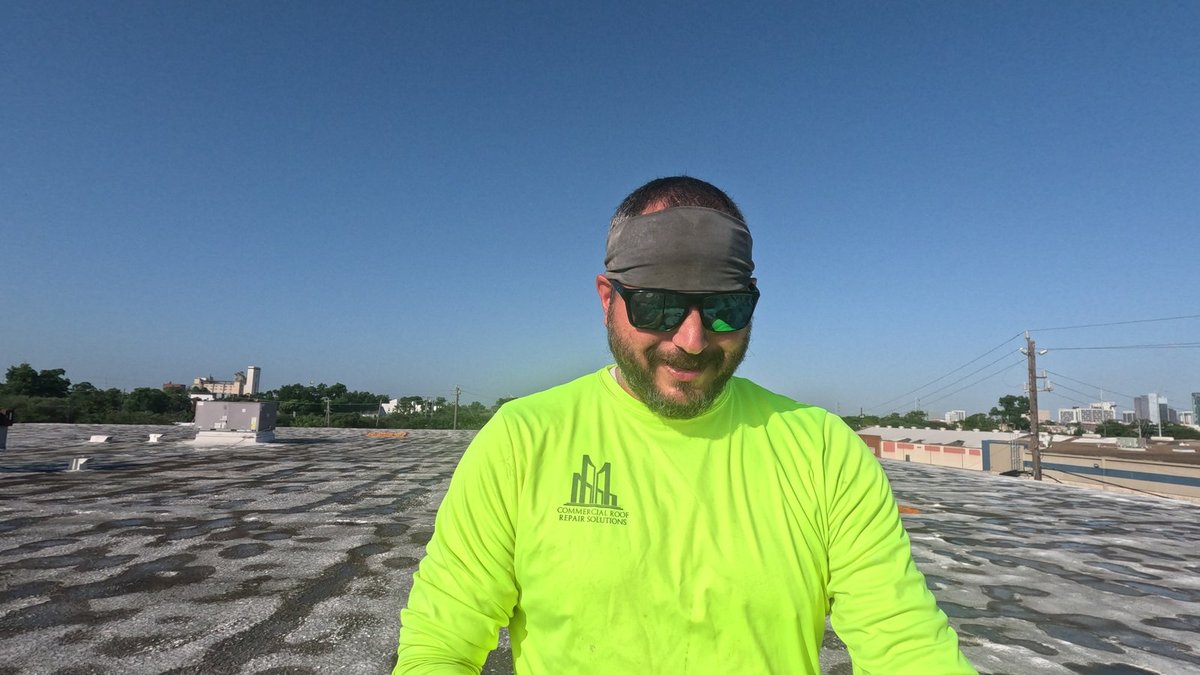
That’s not how we work. CRRS is owner-operated, and I’ve been on the roofs. When we evaluate your building, the goal is to match the system to the roof, not push every owner into the same product. Sometimes that’s a repair. Sometimes it’s silicone. Sometimes it’s a TPO recover, installed with crews we’ve worked with for years. Sometimes it’s a full tear-off. You’ll get documentation that shows you why, so you can make the call before an emergency makes it for you.
Commercial TPO Roofing FAQ
Is TPO good for flat roofs?
Yes. It’s one of the most common membranes for flat and low-slope commercial roofs. The roof still has to drain and meet the manufacturer’s slope requirements.
Is 60 mil TPO better than 45 mil?
It gives you more membrane above the scrim to stand up to UV, traffic, and hail. It’s my baseline spec on most commercial jobs in Texas.
Can TPO go over a metal roof?
Yes, with the right engineered system. That usually means flute fill, insulation, and fastening that passes the manufacturer’s requirements. We’re doing exactly that on a 12,250 SF industrial building near Alvin.
Does a white TPO roof lower energy bills?
It reflects a lot of solar heat, which helps in Texas. Actual savings depend on your insulation and how the building runs.
Can a leaking TPO roof be coated instead of replaced?
Sometimes. The membrane has to be in good enough shape, the roof can’t be wet throughout, and the coating has to be approved for TPO. Coatings are our in-house specialty, so we’ll tell you straight whether yours qualifies.
Does a 20-year warranty mean my roof lasts 20 years?
No. The warranty term, the real service life, and what’s actually covered are three different things.
Do I need pullout tests for a TPO recover?
Often, yes. Manufacturers want proof that the fasteners will hold to the existing deck before they’ll warranty the system.
What happens to my repair money if I end up replacing the roof?
With most contractors, it’s gone. Under the CRRS Roof Equity Program, repair spending counts toward your future roof, up to the program limit.
The Bottom Line
Commercial TPO roofing is a great roof when it’s the right roof, specced right, fastened right, and detailed right. The real question isn’t TPO versus everything else. It’s what your roof needs today and how long you’re keeping the building.
If you own or manage a commercial roof in Houston, along the Gulf Coast, or anywhere in Texas, and you want an honest look at repair vs. silicone vs. recover vs. replacement, call me at 281-928-4428 or reach us here. And ask about the Roof Equity Program, so your repair money builds toward your next roof instead of vanishing.
Commercial Roof Repair Solutions LLC | 281-928-4428 | commercialroofrepairsolutions.com

