

Do You Need a Vapor Barrier Under a Metal Roof in Houston Buildings?
Do you need a vapor barrier under a metal roof in Houston? In this climate, that question is not theoretical. It is one of the most common reasons metal roofs fail early across Houston-area commercial buildings.
Commercial Roof Repair Solutions inspects metal roofs every week where the panels look fine from the outside, but hidden moisture damage is already underway underneath. In almost every case, the issue traces back to missing or incorrectly installed vapor control.
This article explains when a vapor barrier is required, why Houston changes the answer, and how to avoid costly moisture problems.
Key Takeaways
- Houston humidity drives vapor movement
- Metal roofs sweat without control
- Not all buildings need barriers
- Placement matters more than material
Why Vapor Barriers Matter Under Metal Roofs
Why vapor barriers matter under metal roofs becomes clear when Houston humidity enters the picture.
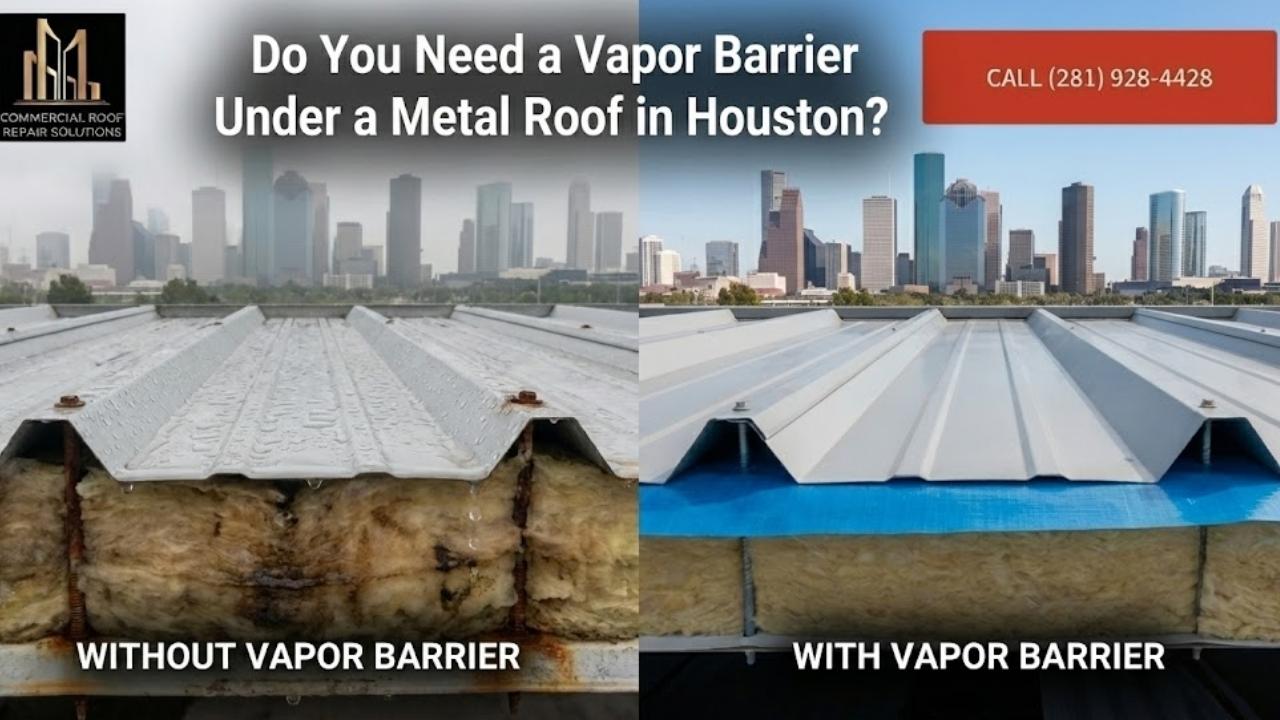
Warm, moisture-heavy air is constantly trying to move from the inside of a building toward cooler surfaces. Metal roofing cools quickly at night and during storms. When that warm air hits the underside of the metal or cold roof deck, condensation forms.
A vapor barrier slows or stops that moisture movement before it becomes liquid water inside the roof assembly.
Without vapor control, moisture can:
- Saturate insulation
- Cause hidden mold growth
- Accelerate corrosion of metal panels
- Reduce energy efficiency
- Shorten roof lifespan
Commercial Roof Repair Solutions sees more damage from trapped moisture than from leaks in Houston metal roofs.
Houston Climate Makes Vapor Barriers More Critical
Houston climate makes vapor barriers more critical than in many other regions.
High humidity, long cooling seasons, and air-conditioned interiors create constant vapor drive upward toward the roof. Even buildings without visible leaks can experience moisture buildup inside the roof system.
In Houston, vapor moves:
- From conditioned interior spaces upward
- Through ceilings and insulation
- Into cooler roof components
A vapor barrier helps control that movement before condensation occurs.
Do All Metal Roofs in Houston Need a Vapor Barrier?
Do all metal roofs in Houston need a vapor barrier depends on the building and roof assembly.
In most commercial buildings, the answer is yes, but not always.
Vapor barriers are strongly recommended when:
- The building is air-conditioned
- Insulation is installed below the roof deck
- The space below is occupied
- There is limited roof ventilation
Vapor barriers may not be required when:
- The structure is unconditioned or open-air
- Properly designed vented assemblies are used
- Condensation-control membranes are installed under panels
Commercial Roof Repair Solutions evaluates vapor movement, not just roofing materials, before making that determination.
Vapor Barrier vs Air Gap: They Are Not the Same
Vapor barrier vs air gap confusion causes many Houston metal roof problems.
An air gap allows airflow to remove heat and moisture. A vapor barrier controls moisture migration through the roof assembly. They serve different purposes and often work best together.
In Houston:
- Air gaps help manage condensation risk
- Vapor barriers help block moisture movement
- One does not replace the other
Skipping either can create long-term issues, even with high-quality metal panels.
Where Vapor Barriers Should Be Installed
Where vapor barriers should be installed is just as important as having one.
In Houston commercial buildings, vapor barriers are typically placed:
- On the warm-in-winter side of insulation
- Above the ceiling deck in conditioned spaces
- Below insulation in certain roof assemblies
Incorrect placement can trap moisture instead of stopping it. That mistake leads to sweating panels, wet insulation, and corrosion that goes unnoticed for years.
Commercial Roof Repair Solutions focuses heavily on correct placement based on how the building is used and cooled.
Common Vapor Barrier Materials Used
Common vapor barrier materials used under metal roofs vary by system design.
Typical options include:
- Polyethylene sheets
- Foil-faced insulation
- Self-adhered vapor-retarder membranes
- Specialized underlayments with vapor control
Material choice matters less than compatibility with the full roof assembly. The wrong combination can block drying paths and create moisture traps.
What Happens When Vapor Barriers Are Missing
What happens when vapor barriers are missing often stays hidden until damage is advanced.
Without vapor control:
- Condensation forms regularly
- Insulation loses R-value
- Mold develops in concealed spaces
- Metal corrodes from the underside
- Roof systems fail prematurely
Many Houston property owners discover these problems only during renovations or leak investigations.
Metal Roof Retrofits and Vapor Barriers
Metal roof retrofits and vapor barriers go hand in hand.
When metal panels are installed over an existing roof, the existing layers may or may not provide vapor control. Assuming they do is risky.
Retrofit projects should include:
- Moisture assessments
- Review of existing vapor layers
- Added vapor control if needed
Commercial Roof Repair Solutions frequently correct retrofit installations where vapor barriers were overlooked.
Energy Efficiency and Indoor Comfort
Energy efficiency and indoor comfort are directly affected by vapor barriers.
Moist insulation does not insulate. When vapor control is missing, HVAC systems work harder to maintain temperatures. That increases energy costs and creates comfort issues for occupants.
In Houston’s long cooling season, vapor barriers help maintain consistent interior conditions and reduce operating costs.
Code and Manufacturer Considerations
Code and manufacturer considerations often require vapor control.
Many metal roofing manufacturers include vapor barrier requirements in their installation guidelines, especially for humid climates like Houston. Local building codes may also reference vapor retarder use depending on building type.
Ignoring these requirements can lead to:
- Failed inspections
- Voided warranties
- Expensive corrective work
Commercial Roof Repair Solutions stays aligned with Houston-area codes and manufacturer specifications on every project.
How Commercial Roof Repair Solutions Evaluates Vapor Control
How Commercial Roof Repair Solutions evaluates vapor control is practical and site-specific.
Each project includes:
- Reviewing building use and occupancy
- Assessing insulation type and placement
- Identifying vapor drive direction
- Designing systems that can dry properly
The goal is long-term performance, not just passing inspection.
When to Address Vapor Barriers
When to address vapor barriers is before installation or during major repairs.
Adding vapor control later is possible but more expensive. Early planning prevents moisture damage, energy loss, and premature roof failure.
If a metal roof shows signs of sweating, corrosion, or insulation issues, vapor control should be evaluated immediately.
The Bottom Line for Houston Metal Roofs
The bottom line for Houston metal roofs is clear.
In most conditioned commercial buildings, a vapor barrier under a metal roof is not optional. It is a critical component driven by humidity, cooling loads, and long-term durability.
Skipping it may save money upfront, but it almost always costs more later.
Commercial Roof Repair Solutions helps Houston-area property owners design and maintain metal roof systems that control moisture the right way.
About The Commercial Roofing Specialist

Chris Jokerst – Houston’s Trusted Commercial Roof Repair Specialist
When it comes to protecting your business, your roof isn’t just another structure—it’s your first line of defense. For over 16 years, Chris Jokerst, owner of Commercial Roof Repair Solutions in Houston, TX, has built a reputation as a true expert in commercial roofing repair and roof restoration.
With millions of square feet of commercial roofing systems installed and countless repairs completed, Chris has earned the trust of property owners and managers across Houston and beyond.
Experience That Speaks for Itself
Chris began his career the old-fashioned way—by learning from seasoned roofing professionals and putting in years of hands-on work. From apprenticeships to leading major projects, he developed a deep understanding of what makes a roofing system last. Today, he brings that same dedication to every job, whether it’s a small leak repair or a full commercial roof replacement.
Why Houston Businesses Choose Chris
* Proven Expertise: 16+ years specializing in commercial roofing repair and roof restoration.
* Dependability: Fast, effective solutions that minimize downtime and prevent costly damage.
* Honesty & Integrity: Transparent recommendations with your best interest in mind.
* Quality First: Only the highest-grade materials and modern techniques.
Chris understands that a roof leak is more than an inconvenience—it’s a threat to your business operations and bottom line. That’s why he approaches every project with precision, urgency, and a commitment to excellence.
Questions about your roof? Call Commercial Roof Repair Solutions at (281) 928-4428 for friendly guidance or a free, no-obligation quote.
